
How to Standardize Technology Across Multiple Office Locations
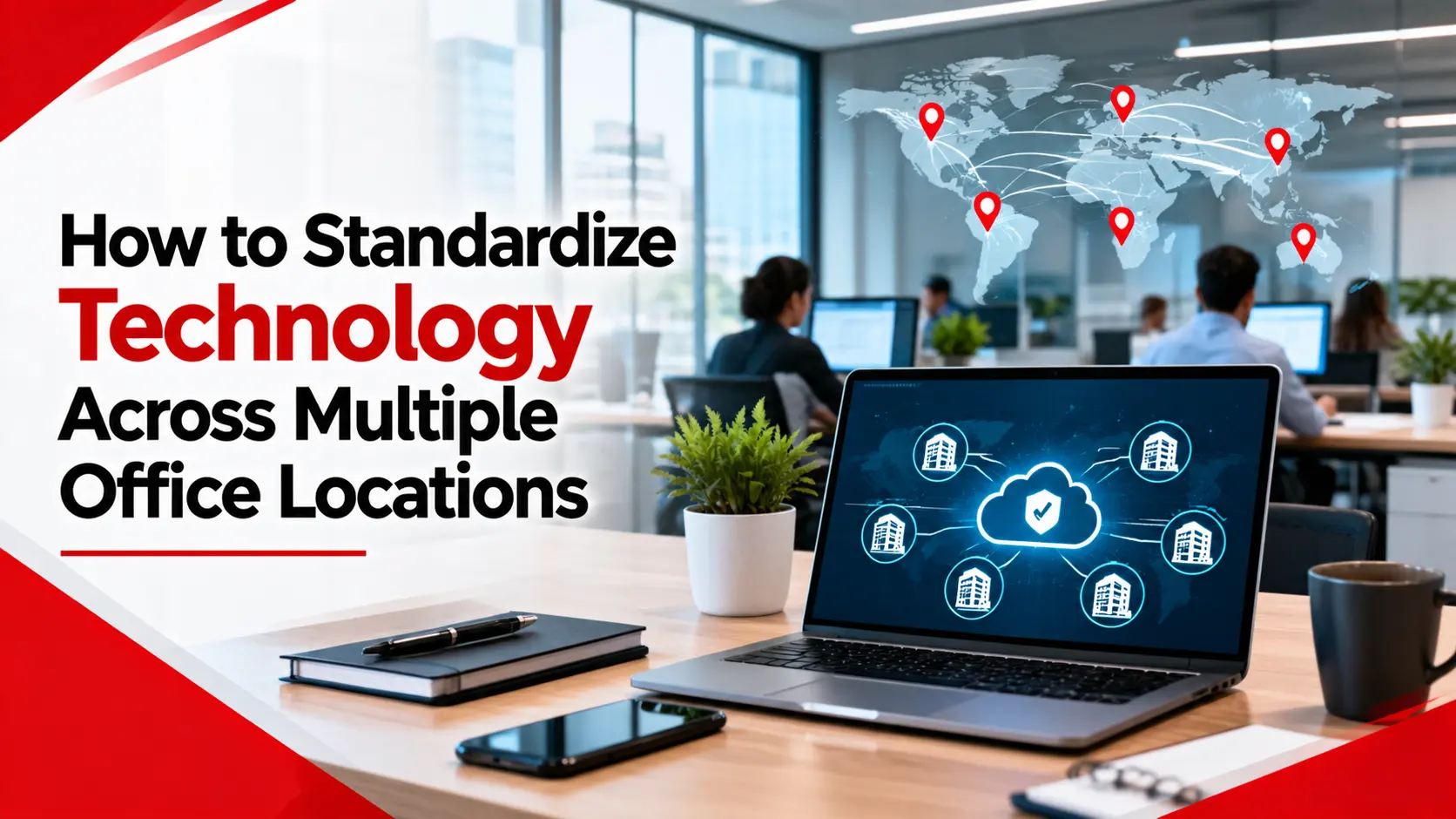
Expansion is rarely a perfectly planned process. A business opens a second office because demand increases, another location is acquired, or a regional team starts working from a new city. Each new office solves a business problem.
At the same time, it often creates a technology problem:
- The first office uses one internet provider.
- The second buys different laptops.
- The third chooses its own phone system.
- Someone purchases software using a company credit card because it solves an immediate need.
None of these decisions seem significant on their own. But after a few years, the organization is no longer managing one technology environment it’s managing several. That makes support more difficult, security less consistent, and future growth more expensive than it needs to be.
Standardizing technology isn’t about making every office identical. It’s about creating consistency where it matters most.
Why Businesses Drift Apart
Very few companies intentionally create different technology environments. It usually happens because decisions are made independently over time:
- A local manager buys equipment from a nearby supplier.
- One office upgrades computers while another delays replacements.
- Different teams subscribe to different software because it’s convenient.
Eventually, employees in different locations are using completely different tools to do the same job. Navigating these unvetted technology risks during business expansion quickly compounds operational bottlenecks. The longer this continues, the harder it becomes to manage.
Start With Visibility
Before you can standardize anything, you need a clear picture of what already exists. Many businesses are surprised by what they discover:
- Different laptop models.
- Multiple antivirus products.
- Software licenses that nobody remembers purchasing.
- Networking equipment of different ages and manufacturers.
The first step isn’t replacing everything. It’s understanding what you have today. Periodically evaluating how often the business reviews IT infrastructure provides the clear baseline needed to conduct a full inventory and establish a foundation for every decision that follows.
Decide What Should Be Standard
Not every piece of technology needs to be identical. A warehouse has different requirements than a corporate office, and a design team may need more powerful computers than an administrative department.
Instead of trying to standardize everything, identify the areas where consistency delivers the greatest value. For many businesses, partnering for dedicated multi-location IT services helps streamline these core operational areas:
- operating systems
- productivity software
- cybersecurity tools
- communication platforms
- laptop and desktop standards
- onboarding procedures
- backup policies
These standards make technology easier to support while still allowing flexibility where it’s needed.
Create a Consistent Employee Experience
Imagine an employee transferring from one office to another. Should they have to learn a completely different way to access files, join meetings or request IT support? Probably not.
Employees are usually more productive when they encounter familiar systems wherever they work. Consistency also makes onboarding easier because new hires learn one set of tools instead of several. Having a unified IT support helpdesk ensures that staff at any branch resolve technical hurdles through a single, dependable workflow.
Standardize Security Before Hardware
Many organizations focus first on replacing computers. Often, the bigger priority is ensuring every office follows the same security practices. For example:
- Are all devices protected with the same security software?
- Is multi-factor authentication enabled everywhere?
- Are software updates managed consistently?
- Do all locations follow the same password policies?
A business is only as secure as its weakest location. Establishing comprehensive cybersecurity services and conducting an audit against a strict cybersecurity checklist for small businesses helps reduce unnecessary entry points and vulnerabilities across the entire organization.
Build One Communication Platform
Communication is often one of the easiest areas to standardize. When different offices use different:
- phone systems
- messaging platforms
- video meeting software
- file-sharing tools
collaboration becomes unnecessarily complicated. Implementing modern VoIP and business communications immediately bridges barriers between branches.
For organizations managing multiple branches, establishing a reliable business communication setup for multi-location companies ensures remote workers and branch offices collaborate smoothly without dropped calls or fragmented messaging.
Develop Standard Onboarding and Offboarding Processes
Technology consistency isn’t only about devices; it’s also about processes. When a new employee joins, every office should follow the same approach for:
- creating user accounts
- assigning devices
- granting software access
- applying security policies
The same applies when an employee leaves. Standard offboarding procedures help ensure access is removed promptly and consistently.
Replace Technology Gradually
One concern business owners often have is cost. Standardization doesn’t require replacing every computer or network device overnight.
A phased approach is usually more practical. For example, as older equipment reaches the end of its lifecycle, replace it with devices that meet the company’s standards. Pairing this rollout with ongoing IT budget planning for small businesses ensures your environment becomes more consistent over time without requiring an unsustainable capital investment.
Document Your Standards
Technology standards shouldn’t exist only in someone’s memory. Documenting them makes future decisions much easier. Your documentation might include:
- approved hardware
- approved software
- security requirements
- purchasing guidelines
- support procedures
- replacement schedules
This helps ensure every new office follows the same approach rather than starting from scratch.
Review Standards as the Business Grows
Technology doesn’t stand still, and neither should your standards. As the business evolves, it’s worth reviewing whether existing tools still meet operational needs. Adopting an architecture centered on centralized IT for multi-location businesses makes it easy to monitor and answer questions like:
- Are employees using approved software?
- Have new business requirements emerged?
- Are our security standards still appropriate?
- Do all offices follow the same onboarding process?
Regular reviews help maintain consistency without preventing innovation.
Standardization Supports Growth
One of the biggest advantages of standardization isn’t solving today’s problems it’s making tomorrow’s growth easier.
When opening a new office becomes a repeatable process rather than a series of technology decisions, expansion becomes faster and more predictable. Instead of asking, “What should we buy?”, the question becomes: “How quickly can we implement our existing standards?” That’s a much easier conversation.
Final Thoughts
As businesses expand, technology naturally becomes more complex. Without a clear strategy, each office develops its own way of working, making support more difficult and increasing security risks.
Standardization helps bring those environments together. It creates consistency for employees, simplifies IT management, strengthens security, and provides a stronger foundation for future growth. Partnering with Sierra Experts can help your team efficiently create, document and deploy these cross-branch standards.
The goal isn’t to remove flexibility. It’s to eliminate unnecessary complexity so every office can operate as part of one connected organization.
Why should businesses standardize technology across offices?
Standardization improves security, simplifies IT support, creates a consistent employee experience, and makes future growth easier to manage.
Does every office need identical technology?
No. Different departments and locations may have different operational needs. The objective is consistency in core systems and processes, not identical equipment everywhere.
What should businesses standardize first?
Many organizations begin with security policies, communication platforms, productivity software, device standards, and onboarding procedures.
Is standardizing technology expensive?
It doesn’t have to be. Many businesses standardize gradually by replacing equipment and software as part of their normal upgrade cycle.
How often should technology standards be reviewed?
Reviewing standards annually or whenever the business experiences significant growth or operational changes is a good practice.
Related Posts

Technology Risks During Business Expansion (And How to Avoid Them)
Growth is usually measured by numbers: More customers More employees More revenue More locations What often goes unnoticed is that every stage of growth also

Secure IT for Growing Companies: Building a Foundation That Scales
Growth changes more than revenue; it changes the way a business uses technology. A company with ten employees can often get by with a fairly

IT Budget Planning for Small and Mid-Sized Businesses: A Smarter Way to Invest in Technology
For many businesses, the IT budget isn’t really a budget; it’s a series of unexpected expenses: A server fails. Several laptops need to be replaced
HIPAA Compliance and IT: What Healthcare Organizations Need to Know
Mention HIPAA to most healthcare professionals and the conversation usually turns to paperwork: Policies Documentation Training Compliance audits Those things are certainly part of the