For many businesses, the IT budget isn’t really a budget; it’s a series of unexpected expenses:
- A server fails.
- Several laptops need to be replaced at the same time.
- Software subscription prices increase.
- A cybersecurity issue requires immediate attention.
Technology becomes something the business pays for when it has no other choice. It’s an expensive way to operate.
The businesses that get the most value from technology usually take a different approach. Instead of treating IT as a collection of emergency purchases, they plan for it the same way they plan for staffing, equipment, or marketing.
The goal isn’t to spend more on technology. It’s to spend more intentionally.
Technology Should Support Business Goals
Before discussing numbers, it’s worth asking a simple question: What is the business trying to achieve over the next few years?
Hiring twenty new employees requires different technology than maintaining a stable workforce. Opening another location changes infrastructure needs. Expanding remote work affects security and collaboration. Launching new services may require new software.
A technology budget should reflect where the business is going, not just where it is today. Aligning spend with long-term objectives starts with structured technology planning for small businesses so every investment directly drives operations forward.
Understand Your Current Spending
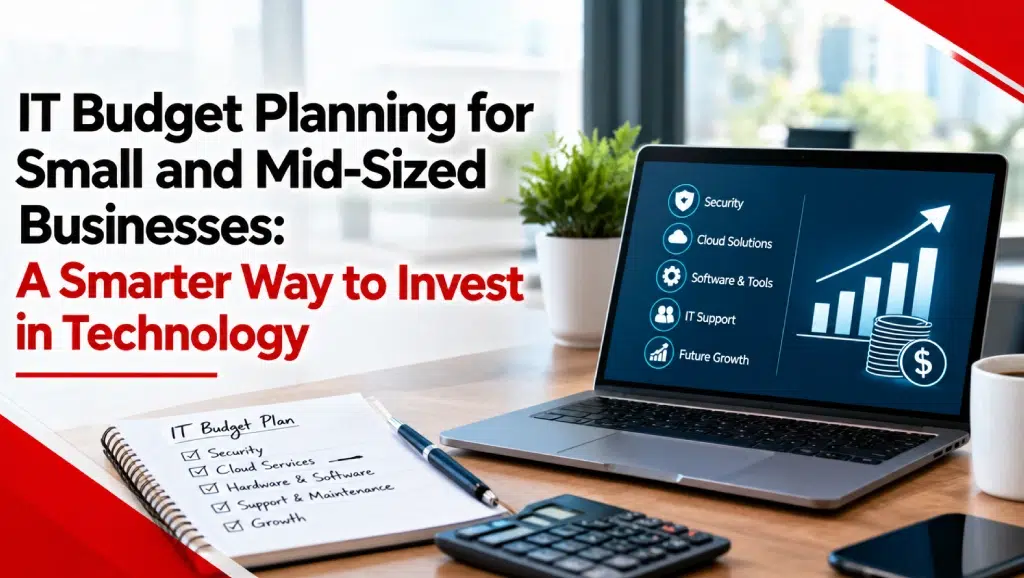
Many business owners know roughly what they spend on IT. Fewer know exactly where that money goes. A typical technology budget may include:
- computers and laptops
- software subscriptions
- cloud services
- cybersecurity tools
- internet and networking
- small business IT services and outsourced support
- backups and disaster recovery
- website hosting
- hardware replacements
Looking at these costs together often reveals opportunities to simplify spending or eliminate duplicate services. Working with a dedicated provider like Sierra Experts helps leadership gain visibility into total technology ownership and benchmark operating expenditures.
Plan for Hardware Replacement
Every business relies on equipment with a limited lifespan: computers slow down, networking equipment becomes outdated, and servers reach the end of manufacturer support.
The mistake many businesses make is replacing everything only after it fails. A more sustainable approach is to replace equipment gradually. Understanding how often a business should review IT infrastructure enables teams to establish realistic refresh cycles. Instead of facing one large expense every few years, costs become more predictable, and employees benefit from more reliable technology.
Don’t Forget Software Costs
The shift to cloud software has changed the way businesses budget for technology. Instead of making one large purchase every few years, companies now manage dozens of monthly or annual subscriptions. These might include:
- Microsoft 365 licensing and related productivity suites
- accounting software
- CRM platforms
- project management tools
- cybersecurity services
- communication platforms
Reviewing subscriptions regularly helps ensure the business pays for software that employees actually use, rather than accumulating costly license shelfware.
Budget for Cybersecurity Before You Need It
Cybersecurity is often treated as an emergency expense. A business experiences an incident, and only then does security become a priority.
Planning ahead is usually far less expensive than recovering from a cyberattack. An IT budget should incorporate proactive cybersecurity services to cover:
- security software
- employee awareness training
- regular vulnerability assessments
- backups
- ongoing monitoring
Reviewing a comprehensive cybersecurity checklist for small businesses ensures your annual budget addresses critical defensive gaps before they lead to operational disruptions. Security is no longer optional overhead; it’s part of running a modern business.
Include Growth in the Budget
Technology spending shouldn’t only cover maintenance; it should also support improvement. Consider upcoming initiatives such as:
- hiring additional staff
- opening new offices
- moving applications to the cloud
- upgrading to modern VoIP and business communications
- automating manual processes
Planning for growth avoids situations where technology becomes a bottleneck to business expansion.
Think About the Cost of Doing Nothing
One of the easiest costs to overlook is the cost of delaying investment. For example, a five-year-old laptop may still turn on every morning, but if it takes an employee an extra ten minutes each day to complete routine work, the business is already paying a price.
The same applies to outdated software, slow networks, or manual processes. Unplanned outages carry hidden financial tolls analyzing the actual cost of IT downtime for small businesses reveals that routine maintenance pays for itself.
Not every technology investment generates new revenue; some simply help employees work more efficiently. Over time, those gains can be significant.
Separate Maintenance From Improvement
A practical IT budget often includes two categories:
The first keeps existing systems running. This includes software renewals, hardware replacements, regular upkeep, and reliable IT support and helpdesk services.
The second focuses on improving the business. Examples include:
- implementing new software
- automating workflows
- improving cybersecurity
- upgrading communication tools
- modernizing infrastructure
Separating these categories makes it easier to understand where technology is maintaining the business and where it’s helping the business grow.
Review the Budget Throughout the Year
Technology changes quickly, and so do business priorities. A budget created in January shouldn’t be forgotten until December. Regular reviews help answer questions such as:
- Are we still using every software subscription?
- Have our priorities changed?
- Are any major upgrades approaching?
- Have new security requirements emerged?
Small adjustments throughout the year are usually easier than making large, unexpected decisions under pressure.
Technology Is an Investment, Not Just an Expense
Business owners often ask: “How much should we spend on IT?”
A more useful question is: “What return should we expect from our technology?”
Good technology helps businesses:
- reduce downtime
- improve productivity
- strengthen security
- support growth
- deliver a better customer experience
When viewed through that lens, budgeting becomes less about controlling costs and more about supporting business performance. Researching how much managed IT services cost gives small business leaders a realistic baseline for what end-to-end technology management requires.
Final Thoughts
An effective IT budget isn’t built around worst-case scenarios; it’s built around business priorities.
By understanding current technology costs, planning for equipment lifecycles, investing in cybersecurity, and preparing for future growth, small and mid-sized businesses can avoid many of the surprises that make technology feel unpredictable.
The best technology budgets don’t simply keep the lights on. They give businesses the confidence to grow, knowing their technology is ready to grow with them. Ready to map out your strategic roadmap? Contact our team to assess your environment and build a predictable IT roadmap.
Frequently Asked Questions
What should an IT budget include?
Most IT budgets include hardware, software subscriptions, cybersecurity, cloud services, networking, IT support, backups, and planned equipment replacements.
How often should businesses review their IT budget?
Reviewing the budget at least quarterly helps ensure spending continues to align with business goals and changing technology needs.
Why is hardware replacement planning important?
Replacing equipment on a planned schedule reduces unexpected failures, improves employee productivity, and makes technology spending more predictable.
Should cybersecurity be included in the IT budget?
Yes. Cybersecurity should be treated as an ongoing operational investment rather than an emergency expense after an incident occurs.
How can small businesses reduce unnecessary IT spending?
Regularly reviewing software subscriptions, standardizing technology, planning equipment lifecycles, and aligning technology purchases with business goals can help control costs.