Most businesses don’t replace their phone system because it stops working.
They replace it because it no longer supports the way their employees work.
Calls get dropped.
Remote employees struggle to connect.
Adding a new user becomes a project.
Customers wait longer to reach the right person.
None of these problems may seem serious on their own.
But together, they create friction that affects productivity, customer service, and growth.
A business phone system should make communication easier—not become another technology challenge for your team.
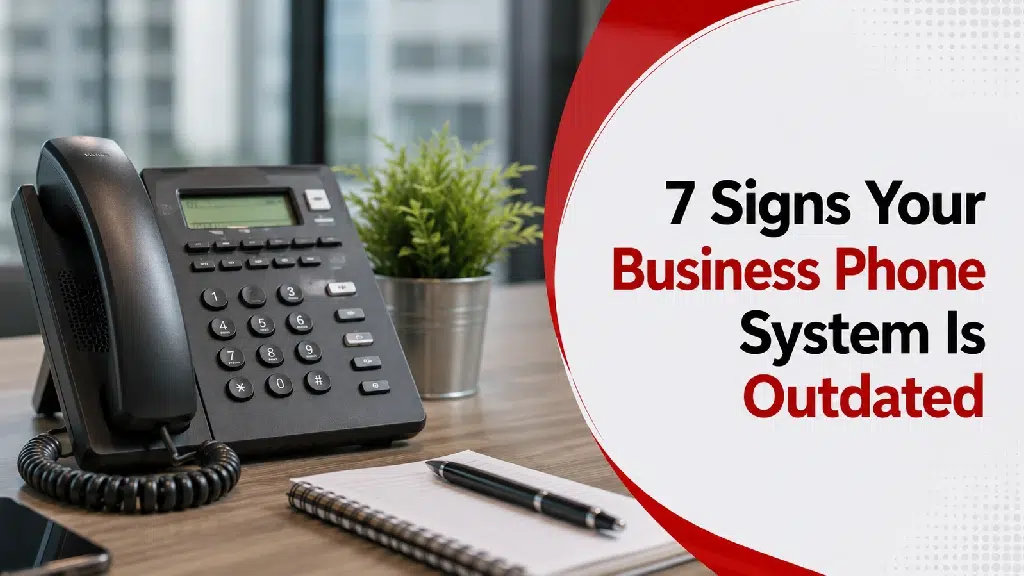
If you’re unsure whether it’s time for an upgrade, here are seven signs your current phone system may be holding your business back.
Sign #1: Employees Can Only Answer Calls From Their Desk
Business communication no longer happens in one location.
Employees now work from:
- home
- branch offices
- customer sites
- while traveling
If your phone system requires employees to be physically sitting at their desks to answer business calls, it may no longer fit the way your business operates. Understanding how VoIP supports hybrid and remote teams can help bridge this gap.
Modern cloud phone systems allow employees to use:
- laptops
- smartphones
- tablets
- desk phones
while keeping the same business number.
This flexibility has become increasingly important for growing businesses.
Sign #2: Adding New Employees Takes Too Much Time
Think about the last time someone joined your company.
How long did it take to give them a business phone?
If the process involved:
- ordering hardware
- installing new lines
- scheduling technicians
- reconfiguring office equipment
Your phone system may be limiting growth.
Modern cloud-based systems often allow new users to be added in minutes rather than days.
As businesses grow, that flexibility becomes valuable.
Sign #3: Your Monthly Phone Costs Keep Increasing
Older phone systems often become more expensive over time.
Costs may include:
- line charges
- maintenance contracts
- replacement hardware
- repair visits
- system upgrades
While every business should evaluate total cost—not just monthly bills—many organizations discover that maintaining aging infrastructure costs more than expected. If you are weighing your options, it helps to understand how much a cloud phone system costs to accurately budget for an upgrade.
An upgrade isn’t always about spending less. Sometimes it’s about getting significantly more value from the investment.
Sign #4: Employees Use Their Personal Phones for Business Calls
This usually starts as a convenience.
Someone works from home.
Another employee visits a client.
A manager forwards office calls to a personal mobile phone.
Over time, personal devices become part of the business phone system.
That creates challenges such as:
- inconsistent caller IDs
- privacy concerns
- missed calls
- difficulty tracking customer conversations
A modern business communication platform gives employees the flexibility to work from anywhere while still presenting a professional business identity.
Sign #5: Customers Struggle to Reach the Right Person
Customer experience often reflects the quality of internal communication.
Common frustrations include:
- being transferred multiple times
- reaching voicemail unexpectedly
- calling the wrong department
- repeating information to multiple employees
Modern phone systems often include features such as:
- auto attendants
- call routing
- business hours
- call queues
These tools help callers reach the right person more efficiently.
Sign #6: Your Phone System Doesn’t Integrate With Other Business Tools
Today’s businesses rely on multiple platforms every day.
Examples include:
- Microsoft Teams
- Microsoft 365
- CRM software
- help desk systems
- calendars
If your phone system operates independently from the rest of your technology, employees may spend unnecessary time switching between applications. For organizations looking to streamline collaboration, exploring Microsoft Teams calling vs. VoIP can highlight the path to a fully unified stack.
Integrated communication platforms help reduce that friction.
Sign #7: You’re Planning for the Future, But Your Phone System Isn’t
One of the clearest signs it’s time for an upgrade is when the business has evolved but the phone system hasn’t.
Ask yourself:
- Are we opening another location?
- Are more employees working remotely?
- Will we hire additional staff?
- Are we expanding customer support?
- Are communication needs becoming more complex?
For organizations expanding their footprint, a reliable business communication setup for multi-location companies is essential. Technology should support future growth—not require replacement every time the business changes. A communication system that scales with the organization often becomes a long-term advantage.
Other Warning Signs to Watch For
Not every outdated phone system shows obvious problems.
Other indicators include:
- dropped calls
- poor audio quality
- limited reporting
- outdated voicemail systems
- difficulty forwarding calls
- lack of mobile applications
- expensive maintenance
If several of these issues sound familiar, it may be time to review your communication strategy. Recurring business call quality problems are a strong indicator that your current infrastructure can no longer keep up with daily operational demands.
Do You Need to Replace Everything?
Not necessarily.
Many businesses assume upgrading means replacing every phone on every desk.
Modern communication platforms are often much more flexible.
Depending on your environment, you may be able to:
- keep existing numbers
- reuse compatible hardware
- migrate in phases
- support both office and remote employees
The right approach depends on your current infrastructure and business goals.
Questions to Ask Before Upgrading
Before making a decision, consider:
- What communication problems are employees experiencing?
- How often do customers struggle to reach us?
- Are remote workers fully supported?
- Is the system easy to manage?
- Will it support future growth?
Answering these questions helps identify whether the issue is the technology itself or how it’s being used. If you decide it’s time for a change, mapping out a plan to reduce communication downtime ensures your transition remains seamless and undisrupted.
Benefits of Modern Cloud Phone Systems
Businesses that modernize their communication systems often gain:
- greater flexibility
- simplified administration
- support for remote work
- improved collaboration
- easier scalability
- better customer experience
When looking at the big picture, comparing VoIP vs. traditional business phones clearly illustrates how moving away from legacy copper lines unlocks these modern advantages. The objective isn’t simply replacing phones. It’s creating a communication platform that grows with the business.
Final Thoughts
An outdated phone system rarely fails overnight. Instead, it gradually becomes less effective as the business changes around it. Employees develop workarounds, customer experiences become inconsistent, and IT teams spend more time maintaining aging infrastructure.
Recognizing these warning signs early allows businesses to modernize before communication problems begin affecting productivity and customer satisfaction. If your organization is experiencing several of the issues discussed in this guide, it may be time to evaluate your foundational technology.
Upgrading to reliable business VoIP phone services can resolve these pain points. To get started on building a framework tailored to your needs, feel free to explore our general IT services or reach out to us directly through our contact us page.
Frequently Asked Questions
How do I know if my business phone system is outdated?
Common signs include poor support for remote work, increasing maintenance costs, limited features, and difficulty adding new users.
Do businesses still use traditional phone systems?
Yes, but many organizations are moving to cloud-based communication platforms that offer greater flexibility and scalability.
Can I keep my existing business phone number?
In many cases, existing business phone numbers can be transferred to a new communication provider.
Is upgrading a phone system disruptive?
Many modern cloud phone systems can be deployed in phases to minimize disruption.
What is the biggest advantage of upgrading?
For many businesses, the biggest advantage is giving employees the ability to communicate effectively from anywhere while simplifying management and improving the customer experience.