For decades, business phone systems looked much the same.
Desk phones sat on every employee’s desk.
Calls traveled through physical telephone lines.
Adding a new employee often meant installing new hardware and waiting for the phone provider to activate another line.
For many businesses, that system worked well.
But the way people work has changed dramatically.
Employees now work from home, travel frequently, collaborate across multiple locations, and expect to stay connected from laptops and mobile devices—not just from a desk phone.
As a result, more organizations are replacing traditional business phone systems with Voice over Internet Protocol, commonly known as VoIP.
Does that mean traditional business phones are obsolete?
Not necessarily.
Both systems can support business communications.
The better choice depends on how your organization operates today and where it plans to grow tomorrow.
What Is a Traditional Business Phone System?
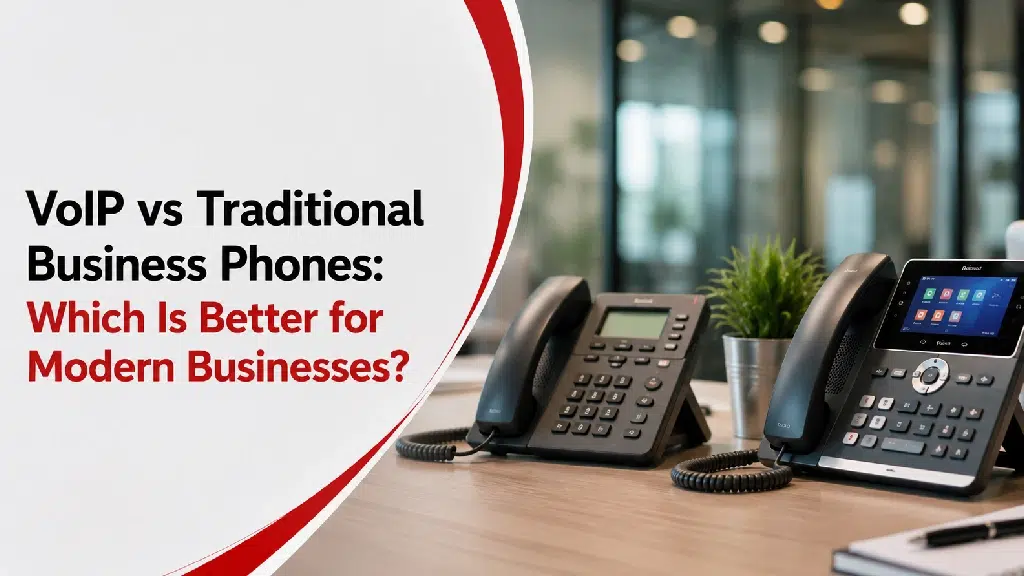
A traditional business phone system uses physical telephone lines to make and receive calls.
Depending on the setup, it may include:
- desk phones
- PBX (Private Branch Exchange) systems
- on-premise phone equipment
- dedicated telephone lines
These systems have been the standard for business communications for many years.
They are generally reliable and familiar, but they were designed for workplaces where employees spend most of their time in the office.
What Is VoIP?
VoIP, or Voice over Internet Protocol, allows phone calls to travel over an internet connection instead of traditional telephone lines.
Rather than relying on dedicated phone infrastructure, employees can make and receive calls using:
- desk phones
- laptops
- smartphones
- tablets
- softphone applications
When looking at how these options stack up side-by-side, comparing VoIP vs traditional business phones reveals that modern internet-based systems fundamentally change how organizations manage their operations, turning business communications into a cloud-based service that employees can access from virtually anywhere.
The Biggest Difference
The biggest difference isn’t the technology.
It’s flexibility.
Traditional phone systems are tied closely to a physical office.
VoIP is tied to the user.
Whether an employee is working from headquarters, a branch office, home, or a client site, they can often use the same business number and communication tools.
VoIP vs Traditional Business Phones: Quick Comparison
|
Feature |
Traditional Phone System |
VoIP |
|
Connection |
Telephone lines |
Internet connection |
|
Remote Work |
Limited |
Built for remote work |
|
Scalability |
Requires additional hardware |
Easy to add users |
|
Mobile Access |
Limited |
Mobile apps available |
|
Video Meetings |
Usually separate |
Often included |
|
Maintenance |
On-premise equipment |
Managed through the cloud |
|
Upgrades |
Hardware dependent |
Regular software updates |
|
Business Continuity |
Office dependent |
Calls can be redirected easily |
Neither system is inherently “better.”
Each is designed for different business needs.
1. Cost Comparison
Cost is often one of the first factors businesses evaluate.
With traditional phone systems, expenses may include:
- PBX hardware
- installation
- maintenance
- additional phone lines
- hardware upgrades
Transitioning to a modern setup alters this financial model significantly. When exploring how much a cloud phone system costs, businesses typically find that upfront capital expenses drop, replacing much of that physical infrastructure with subscription-based services.
Costs typically depend on:
- number of users
- selected features
- call volumes
- hardware requirements
For growing businesses, the ability to add or remove users without purchasing significant new infrastructure can make budgeting more predictable.
2. Flexibility and Remote Work
The workplace has changed.
Many businesses now operate with:
- hybrid employees
- remote staff
- traveling sales teams
- multiple offices
Traditional systems often require employees to be physically connected to the office phone system.
By contrast, understanding how VoIP supports hybrid and remote teams shows how easily location barriers disappear. Employees can answer business calls from:
- desktop applications
- mobile phones
- laptops
- supported desk phones
This creates a more consistent experience regardless of location.
3. Scalability
Business growth often exposes the limitations of traditional systems.
Adding a new employee may require:
- additional phone lines
- hardware installation
- configuration changes
Cloud-based VoIP phone solutions generally make expansion much simpler. Adding a new employee often involves creating another user account and assigning a business number. This flexibility becomes especially valuable for organizations experiencing rapid growth.
3. Features Beyond Voice Calls
Modern business communication extends well beyond making phone calls.
Many VoIP platforms include features such as:
- voicemail to email
- auto attendants
- call forwarding
- mobile applications
- video meetings
- instant messaging
- call analytics
- call recording
Traditional systems can support some of these capabilities, but they often require additional hardware or software.
4. Reliability
One common concern is reliability. Traditional phone systems have long been known for dependable voice service. VoIP reliability depends largely on internet connectivity.
With a stable, business-grade internet connection, VoIP call quality is often excellent. However, a poor network configuration can introduce frustrating issues. If you notice dropped words or lagging audio, troubleshooting common business call quality problems early on can prevent widespread disruption.
To maintain maximum uptime, many organizations also implement proactive steps to reduce communication downtime, such as:
- internet redundancy
- automatic failover
- backup connectivity
These measures help maintain communications during network disruptions.
5. Security Considerations
Like any internet-connected technology, VoIP requires appropriate security controls. Businesses should proactively audit potential VoIP security risks and implement defenses such as:
- strong authentication
- encrypted communications
- secure network configuration
- software updates
- access management
Traditional phone systems face fewer internet-based threats but typically offer fewer modern security capabilities.
Regardless of the technology used, security should remain part of the planning process.
Which Businesses Benefit Most from Traditional Phone Systems?
Traditional systems may still make sense for organizations that:
- operate primarily from one location
- have stable communication requirements
- rely heavily on existing phone infrastructure
- have limited remote work needs
Some industries continue using traditional systems successfully.
Which Businesses Benefit Most from VoIP?
VoIP is often a strong fit for businesses that:
- support remote or hybrid employees
- operate across multiple locations
- expect future growth
- want centralized communication management
- rely on Microsoft Teams or other collaboration platforms
- want employees to stay connected from anywhere
This is especially critical when managing a distributed footprint; setting up an efficient business communication setup for multi-location companies becomes far simpler when using unified, cloud-hosted technology.
Furthermore, many organizations evaluate specific application ecosystems during their migration, heavily debating Microsoft Teams calling vs VoIP stand-alone platforms to see which native integration best fits their current collaboration tools. For many growing businesses, flexibility becomes the deciding factor.
Questions to Ask Before Upgrading
Recognizing the signs your business phone system is outdated is often the catalyst for change. Before replacing your setup, consider:
- Where do employees work?
- How quickly is the business growing?
- Do we have multiple locations?
- Are collaboration tools important?
- How important is mobility?
- What communication challenges are we experiencing today?
The answers often point toward the right solution.
Final Thoughts
Traditional business phone systems helped organizations communicate effectively for decades. They remain a dependable option for some environments.
However, the way businesses operate has changed. Employees are no longer tied to a single office. Customers expect faster communication. Organizations need systems that support flexibility, collaboration, and growth. VoIP was built with those needs in mind.
Rather than simply replacing telephone lines, it transforms business communications into a cloud-based platform that can adapt as the organization evolves. For many businesses, the question is no longer whether VoIP works. It is whether their current phone system is still supporting the way their employees work today.
Need help evaluating your infrastructure or building custom solutions to link your business systems together? Sierra Experts offers comprehensive technical guidance.
If your business workflows require highly specialized applications beyond standard packages, we can also help you weigh custom software vs off-the-shelf software to find your ideal fit. Check out the top signs your business needs custom software, or contact us today to learn more.
Frequently Asked Questions
What is the difference between VoIP and a traditional business phone system?
Traditional phone systems use physical telephone lines, while VoIP uses an internet connection to make and receive calls.
Is VoIP more affordable than traditional business phones?
Costs vary, but VoIP often reduces hardware requirements and offers more predictable monthly pricing for growing businesses.
Does VoIP work for remote employees?
Yes. One of the biggest advantages of VoIP is that employees can make and receive business calls from almost anywhere with an internet connection.
Is call quality better with VoIP?
With a reliable business internet connection, VoIP can provide excellent call quality. Network performance plays an important role.
Can businesses keep their existing phone numbers?
In many cases, businesses can transfer their existing numbers when moving to a VoIP provider.