
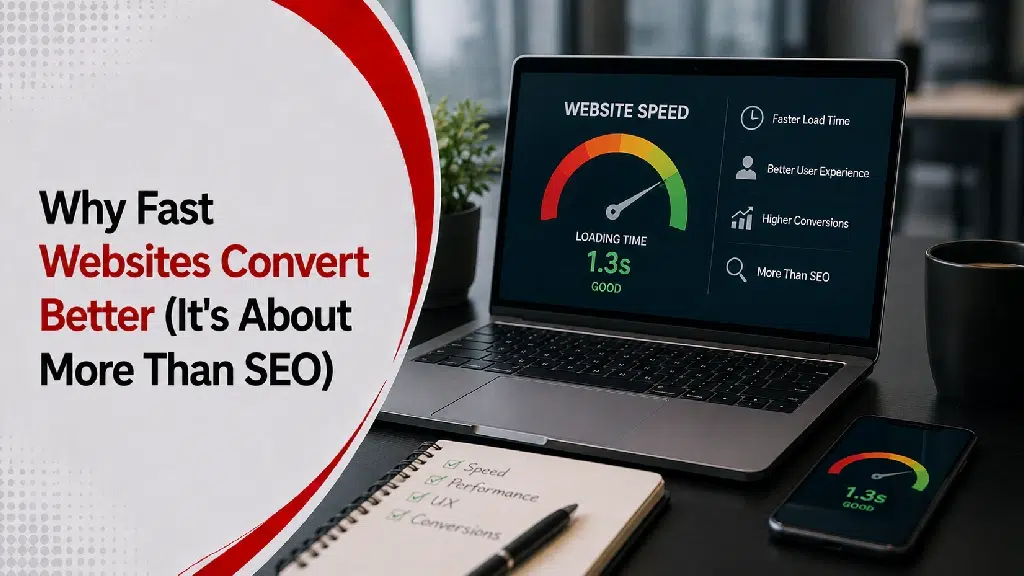
When businesses talk about website speed, the conversation usually starts with Google: “Will a faster website help us rank higher?”
That’s certainly part of the story, but it isn’t the most important part. The real question is this: What happens when a potential customer lands on your website and has to wait?
Most visitors won’t tell you the website feels slow, nor will they email you to say a page took too long to load. They’ll simply leave. And once they’ve left, they’re often only a few clicks away from a competitor.
Website speed isn’t just a technical metric. It’s part of the customer experience, and that experience starts long before someone fills out a contact form or picks up the phone.
Every Second Shapes a First Impression
Imagine walking into a business where nobody greets you. You wait… and wait. Eventually, someone appears. Even if they provide excellent service from that point onward, your first impression has already been affected.
A slow website creates the same feeling. Visitors begin wondering:
- Is the company still operating?
- Did the page fail to load?
- Should I go back and try another website?
Those thoughts happen in seconds, before they’ve even read a word about your services.
Speed Builds Confidence
Customers often judge a business based on small details: a clean office, a prompt reply to an email, or a professional proposal.
A fast website sends a similar message. It suggests that the business pays attention to quality and invests in the experience it provides. Conversely, a slow website can unintentionally communicate the opposite, even if the company itself delivers excellent work.
Slow Websites Interrupt the Buying Journey
Think about how people browse online. They rarely visit one page and make an immediate decision. Instead, they move through the site:
- Homepage
- Service page
- About page
- Customer reviews
- Contact page
If every page takes a few extra seconds to load, those delays add up. By the time a visitor reaches your contact form, they’ve already experienced multiple points of friction. Sometimes that’s enough to explain why business websites fail to generate leads.
Mobile Users Notice Speed Even More
Today, many business websites receive more visitors from mobile devices than desktop computers. Mobile users often browse while they’re:
- travelling
- meeting clients
- between appointments
- using mobile data instead of Wi-Fi
In those situations, performance matters even more. A website that feels acceptable on a fast office connection may feel frustrating on a smartphone.
Designing for mobile speed is no longer optional. It’s part of delivering a good customer experience through professional website development services.
Website Speed Affects More Than SEO
Search engines do consider website performance, but focusing only on rankings misses the bigger picture. A faster website can also improve:
- User engagement
- Enquiry rates
- Time spent on the website
- Customer satisfaction
- Overall browsing experience
Even if two websites rank equally well, the faster one often provides a smoother journey.
Why Websites Become Slow
Performance issues rarely come from a single cause. More often, they’re the result of several small issues accumulating over time. Common examples include:
- oversized images
- unnecessary plugins
- outdated code
- slow hosting
- excessive scripts
- poorly optimised databases
Many websites begin life performing well. As new pages, plugins, and features are added, performance gradually declines. Without regular maintenance and following a solid website security checklist, businesses often don’t notice the change until customers begin experiencing it.
Bigger Isn’t Always Better
It’s easy to assume that adding more animations, videos, pop-ups, and visual effects will make a website better. Sometimes the opposite is true.
A website should help visitors reach information quickly. If every page is overloaded with effects that delay loading or distract from the content, the experience becomes harder, not better. Good design isn’t about adding more: it’s about removing unnecessary friction.
Speed Is Part of Customer Service
Businesses usually think of customer service as something that begins after a customer gets in touch. In reality, it starts much earlier.
Your website is often the first interaction someone has with your business. If they can quickly find answers, navigate easily, and submit an enquiry without delays, you’ve already created a positive experience. That’s customer service too.
Improving Speed Doesn’t Always Require a New Website
Business owners sometimes assume slow performance means they need a complete rebuild. Not necessarily. Many websites improve significantly through changes such as:
- Compressing images
- Removing unnecessary plugins
- Improving hosting
- Optimising code
- Reducing unnecessary scripts
- Enabling caching
Sometimes relatively small improvements can make the experience noticeably faster. Other times, especially with older websites, bigger technical changes may be needed—leading you to evaluate a website redesign vs website rebuild.
If you are considering major technical upgrades or wondering how long website development takes, knowing how to choose the right web development partner can make all the difference in achieving long-term technical success.
Questions Worth Asking
If you’re unsure whether website speed is affecting your business, consider these questions:
- Does the website feel fast on a mobile phone?
- Have customers ever mentioned pages loading slowly?
- When was the website last optimised?
- Are we adding new features without reviewing performance?
- Are visitors leaving before reaching important pages?
These questions often highlight opportunities for improvement.
Speed Should Support Business Goals
The objective isn’t to achieve a perfect performance score. It’s to create a website that helps people accomplish what they came to do, whether that’s:
- Requesting a quote
- Booking an appointment
- Learning about a service
- Making a purchase
The technology should make that journey feel simple. When speed improves the experience, conversions often improve as well.
Final Thoughts
A fast website doesn’t guarantee more enquiries, but a slow website can certainly discourage them.
Visitors expect websites to respond quickly, especially when they’re comparing multiple companies. If your website makes people wait, they’ll often spend that waiting time looking elsewhere.
Improving website speed isn’t just a technical exercise or an SEO task. It’s an investment in the overall customer experience provided by Sierra Experts. And when businesses make it easier for customers to find information and take action, better results often follow naturally.
If you’re ready to optimize your online presence, feel free to contact us today.
Frequently Asked Questions
Does website speed affect conversions?
Yes. Faster websites generally provide a better user experience, making visitors more likely to stay, explore, and complete actions such as submitting an enquiry.
Does website speed affect SEO?
Yes. Search engines consider page performance as one of many factors when evaluating websites.
What causes a website to become slow?
Common causes include large images, outdated plugins, poor hosting, excessive scripts, and inefficient code.
Do I need a new website to improve speed?
Not always. Many performance issues can be improved through optimisation, although older websites may eventually benefit from a rebuild.
Why is mobile speed important?
Many visitors access business websites from smartphones. A fast mobile experience reduces frustration and increases the likelihood that visitors will stay on the site.