
One of the first questions businesses ask before starting a new website project is:
“How long is this going to take?”
It’s an important question because a website launch is often tied to something bigger.
A company is rebranding.
A new service is being introduced.
A business has outgrown its current website.
Marketing campaigns are waiting to go live.
Unfortunately, there isn’t a one-size-fits-all answer.
A five-page brochure website and a custom software platform with customer portals are both “websites,” but they are very different projects.
The better question isn’t “How long does website development take?”
It’s “What kind of website are we building?”
Once that’s clear, estimating a realistic timeline becomes much easier.
There’s No Standard Timeline
Website projects vary because businesses vary.
A local accounting firm has different requirements than a healthcare provider, manufacturer, or software company.
Some projects involve:
- a few service pages
- basic contact forms
- simple integrations
Others require:
- custom functionality
- CRM integrations
- customer portals
- complex user permissions
- API connections
The more moving parts a project has, the longer it generally takes.
What Actually Determines the Timeline?
Most business owners assume development is the longest part of the project.
Surprisingly, it often isn’t.
Planning, content, and decision-making usually have a much bigger impact on timelines than writing code.
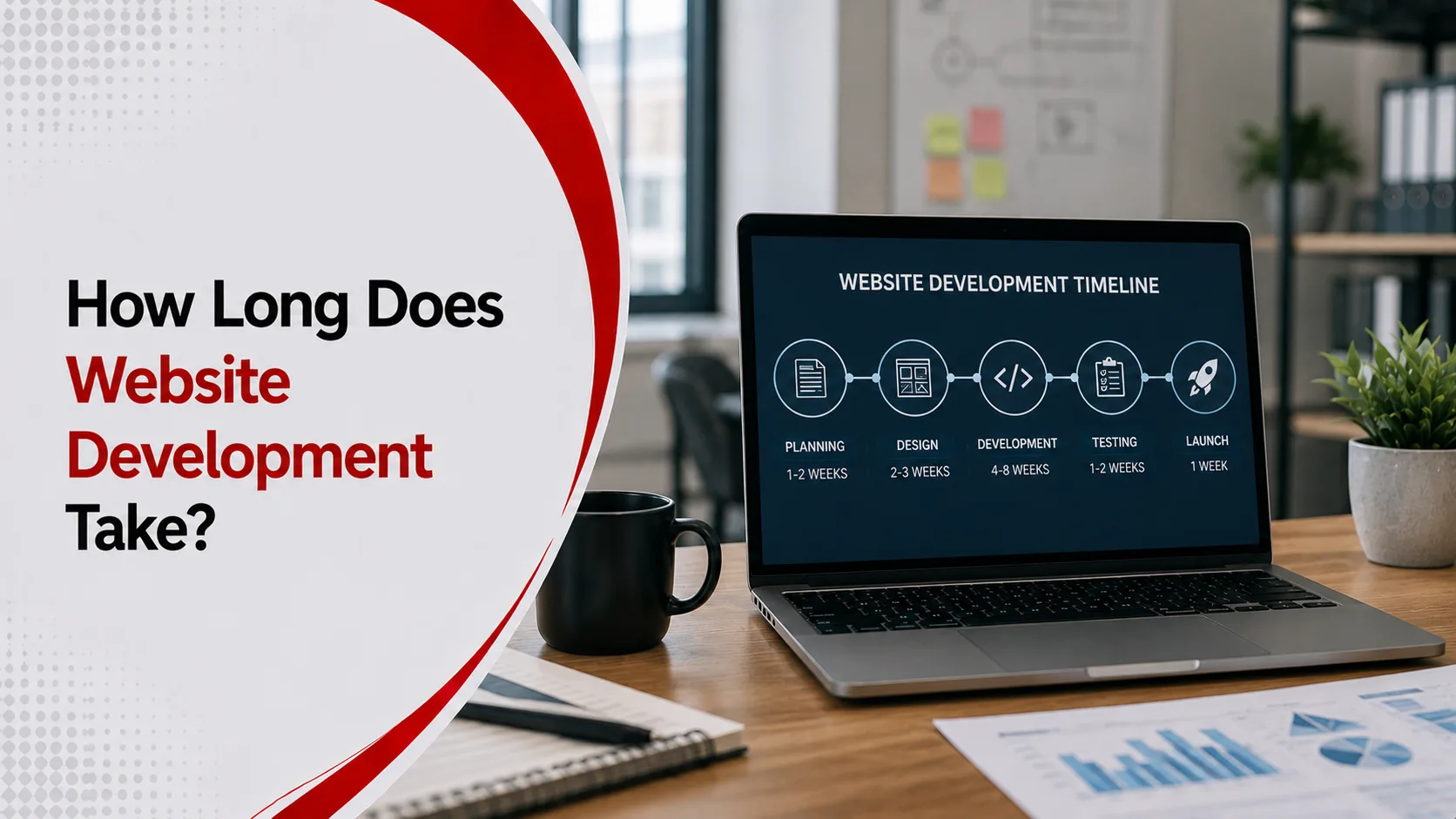
Let’s look at the stages that make up a typical website project.
Stage 1: Discovery and Planning
Every successful website starts with understanding the business.
Before any design work begins, questions need answers.
For example:
- Who is the target audience?
- What should the website achieve?
- Which services deserve the most attention?
- What actions should visitors take?
- Will existing content be reused?
Skipping this stage often leads to redesigns later.
A few extra days spent planning can save weeks of revisions.
Typical timeline: 1–2 weeks
Stage 2: Content Preparation
This stage is often underestimated.
A website cannot be designed properly without knowing what it needs to communicate.
Content includes:
- service pages
- homepage messaging
- calls to action
- images
- team information
- case studies
- FAQs
Many projects slow down because content arrives later than expected.
If content is being written from scratch, it’s worth building that into the schedule; especially since missing key content or structure is one of the primary reasons why business websites fail to generate leads.
Typical timeline: 1–4 weeks (sometimes longer)
Stage 3: Design
Now the website begins to take shape.
Design isn’t simply choosing colours and fonts.
It’s about deciding:
- how information should be organised
- how visitors move through the website
- where important actions should appear
- how the site works on mobile devices
At this phase, companies often weigh whether they need a full top-to-bottom build or if a refresh will suffice; evaluating a website redesign vs website rebuild can clarify the true scope of your project early on.
The design stage usually includes reviews and revisions before anything is built.
Typical timeline: 2–3 weeks
Stage 4: Development
Once the design is approved, developers turn it into a functioning website.
Depending on the project, professional web development services may involve:
- building templates
- responsive layouts
- forms
- integrations
- CMS configuration
- performance optimisation
For straightforward business websites, development is often faster than clients expect.
For custom websites, it’s usually the longest phase.
Typical timeline: 2–8 weeks
Stage 5: Testing
Launching without testing is one of the quickest ways to create problems.
Before the website goes live, it should be reviewed on different:
- browsers
- screen sizes
- devices
Teams also test:
- forms
- navigation
- page speed
- security
- integrations
It’s critical during this phase to audit your site against a comprehensive website security checklist to ensure data protection from day one.
Typical timeline: 1 week
Stage 6: Launch
The launch itself is usually one of the shortest parts of the project.
However, several tasks still need to happen.
Examples include:
- moving the website to live hosting
- checking redirects
- testing forms
- verifying analytics
- monitoring performance
A successful launch is planned rather than rushed.
Typical Timelines by Website Type
Although every project is different, the following ranges are common.
- Small Business Website: Typically 4–8 weeks.
- Service-Based Business Website: Usually 6–10 weeks.
- Large Corporate Website: Often 2–4 months.
- Custom Web Application: Several months depending on complexity.
These aren’t guarantees, but they provide a reasonable expectation for dynamic digital marketing development.
Why Website Projects Take Longer Than Expected
The biggest delays usually have very little to do with development.
More often, projects slow down because of:
1. Delayed Feedback
A design sits waiting for approval.
Content waits for review.
Development pauses while decisions are made.
2. Scope Changes
Halfway through the project, new pages or features are added.
Small additions often have a bigger impact than expected because they affect design, development, and testing.
3. Content Delays
Many businesses underestimate how long it takes to gather:
- photos
- service descriptions
- biographies
- policies
- pricing information
Without content, progress slows.
4. Integration Complexity
Connecting a website to CRM systems, payment gateways, scheduling tools, or other business software often requires additional planning and testing.
Can Website Development Be Rushed?
Technically, yes.
But it usually comes at a cost.
Compressing timelines often means:
- fewer reviews
- less testing
- rushed content
- missed details
A website is often one of the first impressions customers have of a business.
Taking a little longer to launch a polished site is usually better than launching quickly and fixing problems later.
How Businesses Can Help Keep Projects on Schedule
The fastest projects usually have one thing in common:
The client is prepared.
Projects move much more smoothly when businesses:
- assign one decision-maker
- provide content early
- review designs promptly
- avoid major scope changes
- communicate regularly
Website development works best as a partnership rather than a handoff.
Final Thoughts
Website development isn’t just a technical project; it’s a business project.
The timeline depends as much on planning, content, and communication as it does on design and development. A simple website may be ready within a few weeks, while a more complex platform may take several months.
Rather than focusing only on launch dates, businesses should focus on building a site that supports their long-term goals. If you’re ready to start planning your next web project, feel free to contact us or visit Sierra Experts to speak with our technical team.
Frequently Asked Questions
How long does it take to build a business website?
Most business websites take anywhere from four to ten weeks, depending on their size, content, and functionality.
What causes website projects to take longer?
The most common reasons include delayed content, slow approvals, changing project requirements, and complex integrations.
Does custom functionality increase development time?
Yes. Features such as customer portals, booking systems, and software integrations generally extend the timeline.
Can a website be built in two weeks?
Simple websites can sometimes be completed quickly, but most business websites benefit from adequate planning, design, testing, and content preparation.
What is the longest stage of website development?
It varies, but planning, content preparation, and stakeholder feedback often take longer than businesses expect.