When people think about cyber attacks, they often imagine malware, ransomware, or hackers breaking into systems.
Business Email Compromise is different.
There may be no malicious attachment.
No suspicious software.
No obvious warning.
In many cases, the attacker simply sends an email.
The email looks legitimate.
The sender appears familiar.
The request seems reasonable.
And someone takes action.
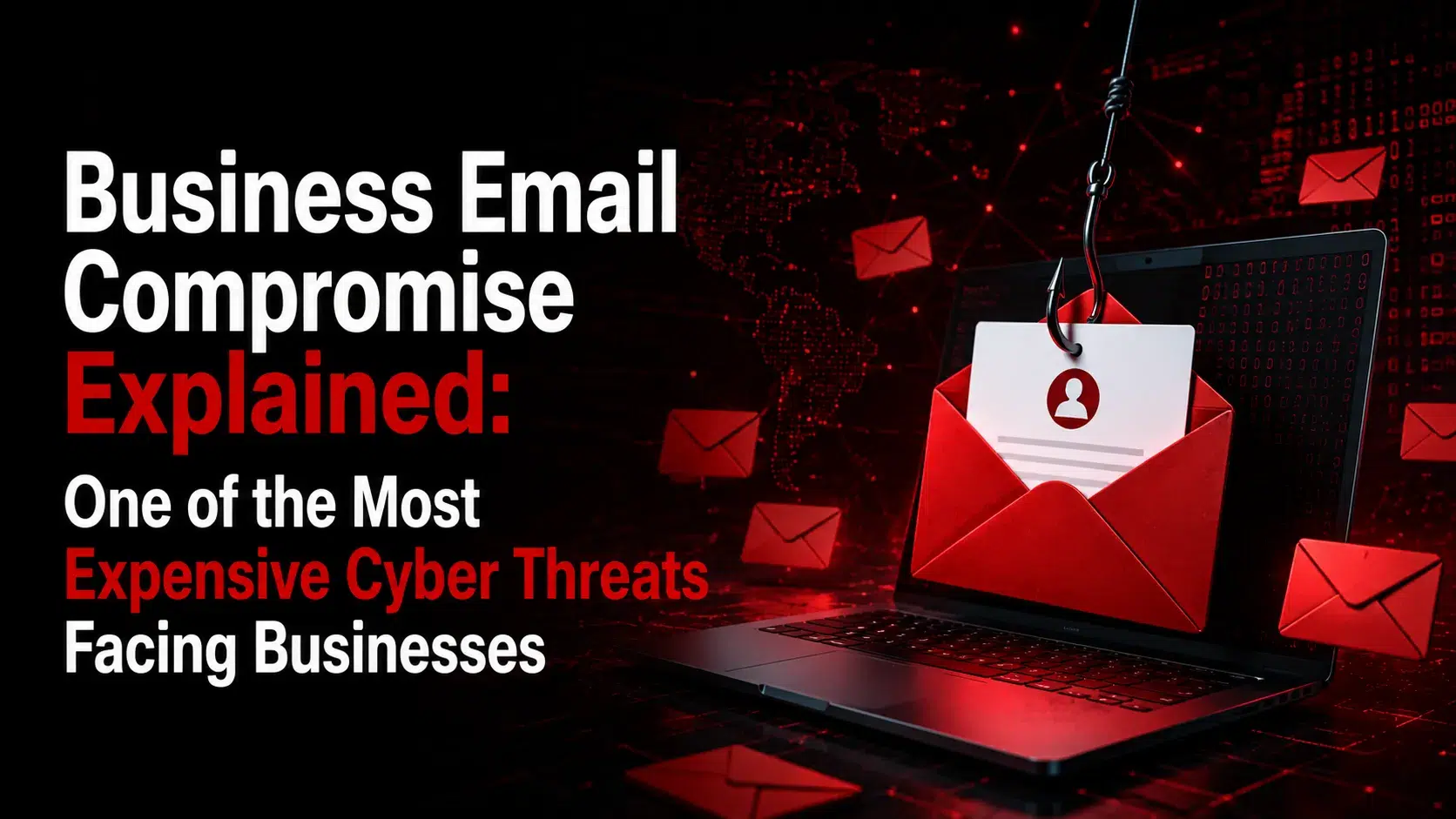
That is why Business Email Compromise, commonly known as BEC, has become one of the most damaging forms of cybercrime affecting businesses today.
It relies less on technology and more on trust.
This guide explains how BEC attacks work, why they are effective, and what businesses can do to reduce risk.
What Is Business Email Compromise?
Business Email Compromise is a type of cyber attack where an attacker uses email to manipulate employees, vendors, customers, or executives into taking an action that benefits the attacker.
That action may involve:
- transferring money
- changing payment details
- sharing sensitive information
- providing credentials
- approving transactions
Unlike many cyber attacks, BEC often relies on deception rather than technical exploits.
The attacker wants the victim to make the mistake voluntarily.
Why Business Email Compromise Is So Effective
Most employees are trained to identify obvious scams.
The problem is that modern BEC attacks rarely look like scams.
The messages are often:
- professionally written
- personalized
- well researched
- contextually relevant
Attackers may spend days or weeks gathering information before sending a message.
They often understand:
- company structure
- employee names
- vendor relationships
- executive titles
- communication styles
That preparation makes fraudulent requests appear legitimate. For many organizations, strengthening cybersecurity for small businesses begins with understanding how attackers exploit trust and communication workflows.
A Simple Example of a BEC Attack
Imagine an accounting employee receives an email that appears to come from a company executive.
The message says:
“We’re finalizing a payment before a meeting. Can you process this wire transfer today?”
The request sounds urgent.
The sender appears familiar.
The amount may even seem reasonable.
If the employee complies without verification, the funds may be sent directly to an attacker.
No malware.
No hacking tools.
Just a convincing email.
How Business Email Compromise Attacks Usually Work
Although every attack differs, most follow a similar pattern.
Step 1: Research
Attackers gather information.
Sources may include:
- company websites
- LinkedIn profiles
- social media
- vendor information
- public records
Step 2: Identify Targets
Common targets include:
- finance departments
- payroll teams
- executives
- administrators
- HR personnel
These employees often have authority or access.
Step 3: Create Trust
Attackers may:
- impersonate executives
- impersonate vendors
- compromise legitimate accounts
- register lookalike domains
The goal is credibility.
Step 4: Request Action
Common requests include:
- wire transfers
- banking changes
- invoice payments
- credential sharing
- sensitive documents
Urgency is often used to discourage verification.
Step 5: Disappear
Once the request succeeds, the attacker moves on.
Recovery can be difficult.
The Most Common Types of BEC Attacks
Not all attacks look the same.
1. Executive Impersonation
An attacker pretends to be:
- CEO
- CFO
- business owner
- senior executive
The request often appears urgent.
2. Vendor Email Fraud
An attacker impersonates a supplier or service provider.
Examples:
- updated payment information
- revised banking instructions
- invoice requests
These attacks often target accounting teams.
3. Payroll Diversion
The attacker convinces HR or payroll personnel to change direct deposit information.
Instead of reaching the employee, payments are redirected elsewhere.
4. Account Compromise
Rather than impersonating someone externally, the attacker gains access to a legitimate business account.
Messages then come from a real email address.
These attacks can be difficult to detect.
Why Employees Fall for BEC Attacks
It is easy to assume victims were careless.
In reality, attackers exploit normal workplace behavior.
Employees are often:
- busy
- multitasking
- responding quickly
- trying to help
BEC attacks take advantage of those conditions.
The goal is not to trick someone technically.
The goal is to create enough urgency that verification gets skipped. Many of these behaviors overlap with the common cybersecurity mistakes employees make during normal business operations.
Warning Signs of Business Email Compromise
Employees should pay attention to requests involving:
- money transfers
- banking changes
- password resets
- confidential information
- unusual urgency
Additional warning signs include:
- unusual sender addresses
- unexpected requests
- changes in communication style
- pressure to bypass procedures
When something feels unusual, it should be verified.
How Businesses Can Reduce BEC Risk
No single control eliminates risk.
The strongest approach combines people, processes, and technology.
Enable Multi-Factor Authentication
MFA helps protect accounts if credentials become exposed.
Priority systems include:
- Microsoft 365
- email platforms
- administrator accounts
Businesses evaluating multi-factor authentication and password management strategies often find that both controls play an important role in reducing account compromise risk.
Train Employees Regularly
Awareness remains one of the most effective defenses.
Employees should know:
- common attack patterns
- verification procedures
- reporting processes
Verify Financial Requests Independently
Never rely solely on email for:
- wire transfers
- banking changes
- payment approvals
Verification should occur through a second communication channel.
Strengthen Email Security
Businesses should review:
- spam filtering
- phishing protection
- cybersecurity checklist for small businessesemail authentication controls
Technology helps reduce exposure before employees interact with messages. Many organizations use managed cybersecurity services to monitor email threats and strengthen protection against evolving attacks.
Create Approval Processes
Important actions should not depend on a single email.
Examples:
- payment approvals
- vendor changes
- payroll modifications
Verification protects both employees and the business. Companies seeking additional guidance can work with the Sierra Experts to improve email security controls, employee training, and fraud prevention processes.
What Should Employees Do If They Suspect a BEC Attack?
If a message appears suspicious:
Do Not Respond Immediately
Avoid engaging until verified.
Preserve the Email
Do not delete it.
It may help with the investigation.
Report It
Follow internal reporting procedures. Organizations with a documented cybersecurity incident response process are often able to investigate and contain suspicious activity more effectively.
Verify Independently
Contact the sender through a known method.
Do not use contact details included in the suspicious email.
Is Business Email Compromise the Same as Phishing?
Not exactly.
Phishing is broader.
BEC is a specific type of attack focused on business communication and manipulation.
Many BEC attacks involve phishing techniques, but the objective is usually financial or operational fraud.
Why BEC Continues to Grow
Businesses increasingly depend on:
- cloud collaboration
- remote work
- digital approvals
Those systems improve efficiency.
They also create opportunities for attackers who understand human behavior.
As technology improves, social engineering often becomes more sophisticated.
Final Thoughts
Business Email Compromise is not a technical problem alone.
It is a trust problem.
Attackers succeed by convincing people to act before they verify.
That is why the strongest defenses combine technology, employee awareness, and clear business processes.
Businesses that encourage verification, strengthen account security, and educate employees are often far better prepared to prevent email fraud before it causes financial or operational damage.
Frequently Asked Questions
What is Business Email Compromise?
Business Email Compromise (BEC) is a cyber attack that uses email deception to trick employees into transferring money, sharing information, or taking unauthorized actions.
Is BEC the same as phishing?
BEC is a specific form of phishing that focuses on business communication and financial or operational fraud.
Who is most often targeted?
Finance teams, executives, payroll personnel, HR departments, and administrators are common targets.
Can MFA stop BEC attacks?
MFA can reduce account compromise risk, but employee awareness and verification procedures remain important.
What is the best defense against BEC?
A combination of MFA, employee training, email security controls, and independent verification processes.