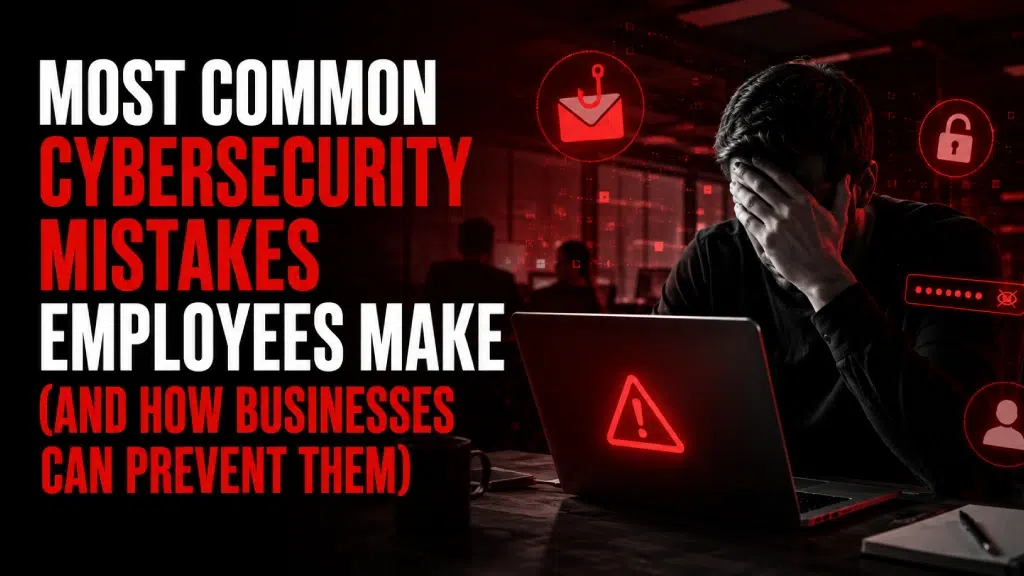
When businesses discuss cybersecurity, the conversation often revolves around software.
Firewalls.
Antivirus.
Monitoring tools.
Cloud security.
But many security incidents do not begin with a technical failure.
They begin with a person making a perfectly understandable mistake.
An employee clicks a link.
A password gets reused.
A suspicious email looks legitimate.
A file is shared with the wrong person.
Most employees are not trying to create risk.
In fact, they are usually trying to do their jobs quickly and efficiently.
That is why human error remains one of the biggest cybersecurity challenges for businesses of every size.
The goal is not to blame employees.
The goal is to understand where mistakes happen and create systems that make those mistakes less likely.
Why Human Error Remains a Major Cybersecurity Risk
Modern workplaces are fast-moving.
Employees deal with:
- emails
- messages
- meetings
- customers
- deadlines
- approvals
- multiple applications
Attackers understand this.
Most cyber attacks do not rely on advanced technical skills.
They rely on people being busy.
When an employee receives fifty emails a day, a convincing fake email only needs to work once.
That is why cybersecurity awareness has become just as important as cybersecurity technology. Effective cybersecurity for small businesses requires addressing both technical vulnerabilities and human behavior.
Mistake #1: Clicking Links Without Verifying Them
This remains one of the most common entry points for cyber attacks.
An employee receives what appears to be:
- a Microsoft login request
- a shared document
- a delivery notification
- an invoice
- a password reset
Everything looks normal.
The employee clicks.
Credentials are entered.
The attacker gains access.
Why It Happens
Most phishing emails no longer contain obvious spelling mistakes or suspicious wording.
Many look legitimate.
Employees are conditioned to respond quickly.
How to Reduce the Risk
Encourage employees to ask:
- Was I expecting this?
- Does the sender look correct?
- Is there unusual urgency?
- Does the link destination make sense?
A few extra seconds can prevent significant problems.
Mistake #2: Reusing Passwords Across Multiple Accounts
Many people reuse passwords simply because they are easier to remember.
Unfortunately, attackers know this.
If credentials are exposed from one service, they may be tested across multiple platforms.
That means a password leaked from an unrelated account could potentially affect business systems.
Why It Happens
People manage dozens of accounts.
Convenience often wins.
How to Reduce the Risk
Businesses should encourage:
- unique passwords
- password managers
- multi-factor authentication
The goal is making secure behavior easier. Implementing multi-factor authentication (MFA) is one of the simplest ways to reduce the impact of compromised credentials.
Mistake #3: Ignoring Software Updates
Updates can feel annoying.
Employees often postpone them because they are busy.
The problem is that updates frequently contain security fixes.
Delays create opportunities.
Why It Happens
Updates interrupt work.
Employees assume nothing bad will happen.
How to Reduce the Risk
Businesses should standardize update policies and automate updates whenever possible.
Security should not depend entirely on employee decisions. Many organizations rely on managed cybersecurity services to help monitor vulnerabilities and maintain security updates consistently.
Mistake #4: Sharing Sensitive Information Too Easily
Employees naturally want to help coworkers and customers.
Sometimes that leads to oversharing.
Examples include:
- sending files to the wrong recipient
- sharing internal documents externally
- discussing sensitive information without verification
Not every incident involves attackers.
Simple mistakes can create risk too.
How to Reduce the Risk
Create clear guidelines around:
- document sharing
- customer verification
- approval processes
- data handling
Mistake #5: Using Personal Devices for Business Activities
Modern work happens everywhere.
Employees often access company systems from:
- personal laptops
- mobile phones
- tablets
While convenient, unmanaged devices may lack security controls.
Why It Happens
Remote work increased flexibility.
Policies often lag behind reality.
How to Reduce the Risk
Establish clear expectations around:
- approved devices
- mobile access
- remote work policies
Mistake #6: Failing to Report Suspicious Activity
Many employees hesitate to report concerns because they fear being wrong.
This creates a problem.
Small incidents become larger incidents when nobody speaks up.
Examples
- unusual login prompts
- suspicious emails
- strange account activity
- unexpected system behavior
How to Reduce the Risk
Create a culture where reporting concerns is encouraged.
It is usually better to investigate a false alarm than ignore a real issue. Having a documented cybersecurity incident response plan helps businesses respond more effectively when suspicious activity is reported.
Mistake #7: Leaving Accounts Logged In
Shared environments create additional risk.
Examples include:
- shared workstations
- conference room computers
- temporary devices
An unattended account can provide unnecessary access.
How to Reduce the Risk
Encourage:
- screen locking
- automatic sign-outs
- device security policies
Mistake #8: Granting Permissions Without Review
Employees often approve requests quickly.
Examples include:
- application permissions
- file access
- software integrations
Not every request should receive automatic approval.
How to Reduce the Risk
Review:
- application permissions
- third-party access
- sharing settings
Regularly.
Mistake #9: Trusting Familiar Names Without Verification
Attackers frequently impersonate:
- executives
- managers
- vendors
- customers
The request appears familiar.
The sender appears legitimate.
The urgency feels real.
That combination can be effective.
How to Reduce the Risk
For unusual requests:
- verify independently
- confirm payment changes
- validate sensitive requests
Trust should not replace verification.
Mistake #10: Assuming Cybersecurity Is Someone Else’s Job
This may be the most dangerous mistake.
Employees often assume:
- IT handles security
- management handles security
- software handles security
In reality, cybersecurity is a shared responsibility.
Every employee influences risk.
Why Employee Awareness Matters More Than Ever
Technology can block many threats.
But technology cannot evaluate every situation.
Employees make decisions throughout the day.
Those decisions affect:
- data security
- customer trust
- operational continuity
Awareness helps employees become part of the solution rather than an unintended vulnerability. Strong employee awareness training can also help businesses prevent ransomware attacks before they disrupt operations.
How Businesses Can Reduce Human Error
The strongest cybersecurity programs focus on both people and technology.
Practical steps include:
- Regular Awareness Training: Short, consistent training works better than annual presentations.
- Multi-Factor Authentication: Reduces the impact of stolen credentials.
- Clear Reporting Procedures: Employees should know exactly how to report concerns.
- Password Management Tools: Reduce password reuse.
- Security Reviews: Help identify recurring risks.
The objective is not perfection.
The objective is making secure decisions easier.
Organizations seeking additional guidance can work with the Sierra Experts to strengthen employee awareness and reduce overall cybersecurity risk.
Final Thoughts
Most cybersecurity incidents do not begin with sophisticated hacking.
They begin with ordinary decisions made during busy workdays.
That is why employee awareness remains one of the most important parts of cybersecurity.
Businesses that combine good technology, clear processes, and practical training often reduce risk significantly without creating unnecessary complexity.
Security improves when employees are informed, supported, and encouraged to slow down when something feels unusual.
Frequently Asked Questions
What is the most common employee cybersecurity mistake?
Clicking phishing links and responding to fraudulent emails remain among the most common mistakes.
Are employees really responsible for cybersecurity?
Cybersecurity is a shared responsibility across the organization, not solely an IT function.
How often should cybersecurity awareness training happen?
Many businesses benefit from ongoing training throughout the year rather than a single annual session.
Can technology eliminate human error?
No. Technology reduces risk, but employee decisions still play a major role.
Why do attackers target employees?
Employees often have access to systems, data, and accounts that attackers want to reach.